
Introduction
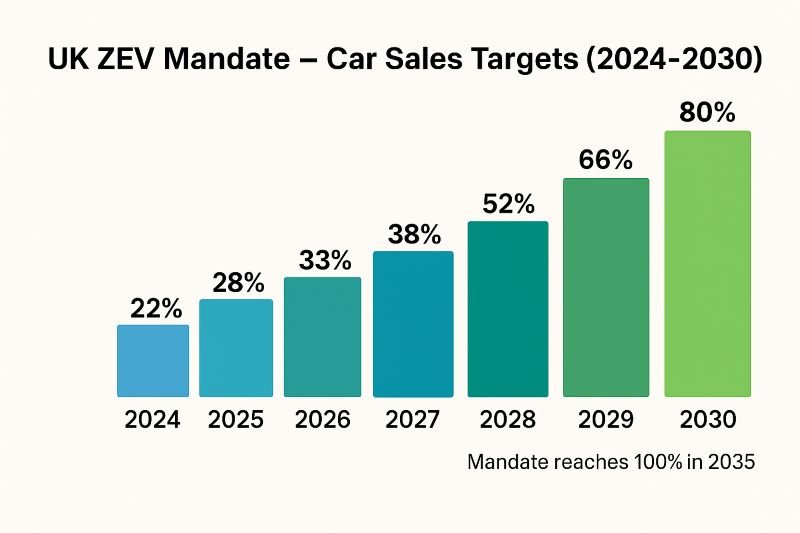
Few policies have stirred as much debate in the UK automotive industry as the Zero Emission Vehicle (ZEV) mandate. Introduced in 2024, it requires carmakers to sell an increasing proportion of electric vehicles each year — starting at 22% in 2024 and rising to 80% by 2030 (Autocar). For some, it’s a bold step toward net‑zero. For others, it’s a heavy‑handed intervention that risks unsettling Britain’s car market. But one thing is clear: the ZEV mandate is already reshaping the way cars are built, sold, and bought in the UK.
The Cost Concerns
Critics argue the mandate could push up prices. Manufacturers face fines of £12,000 per non‑compliant car sold over the limit (Autocar), which may be passed on to consumers. Smaller brands worry about being squeezed out, while sceptics claim the targets are unrealistic given current demand. Others point to the extension of hybrid sales until 2035 (DriveElectric) as proof the government itself recognises the challenges.
Where EVs Save You Money
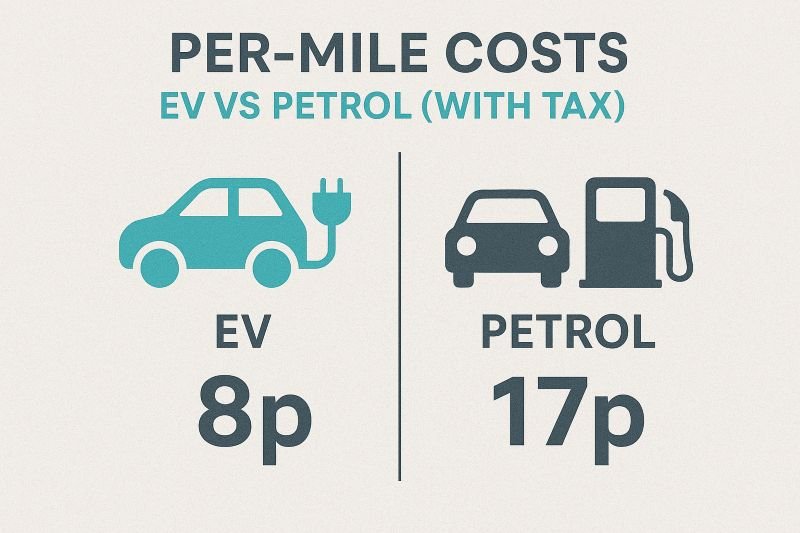
Despite concerns, EVs remain cheaper to run. Home charging averages 5–9p per mile, compared to 12–18p for petrol (RAC). Annual running costs are around £1,735 for EVs versus £3,160 for petrol cars, saving drivers roughly £1,400 per year. Add in lower maintenance costs and exemptions from London’s ULEZ and congestion charges (Transport for London), and the financial case strengthens.
Pros and Cons of EV Ownership
Pros:
- Lower running costs compared to petrol/diesel.
- Exemptions from ULEZ and congestion charges.
- Cleaner air and quieter driving.
- Mandated 8‑year/100,000‑mile battery warranties (Autocar).
Cons:
- Higher upfront purchase prices.
- Public charging can be costly.
- Depreciation remains steeper than petrol, though improving.
Busting the Myths
- Myth: The ZEV mandate will kill consumer choice.
Reality: Hybrids can still be sold until 2035, and exemptions exist for small manufacturers (DriveElectric). - Myth: EV batteries won’t last.
Reality: Mandated warranties ensure replacements if capacity drops below 70% within 8 years. - Myth: The UK isn’t ready for mass EV adoption.
Reality: Over 1.75 million EVs are already on UK roads, with 23.7% of new registrations in 2025 being electric (Zap‑Map). - Myth: The mandate is inflexible.
Reality: Manufacturers can shift more EV sales to later years when demand is stronger (DriveElectric).
A Real‑World Example
Take David, a fleet manager in Leeds. His company traditionally bought diesel vans, but the ZEV mandate means manufacturers are prioritising electric models. By switching early, David secured grants and lower running costs. His fleet now saves thousands annually on fuel and maintenance, while positioning the business as a sustainability leader.
Industry Insights and Stats
- ZEV mandate requires 28% of new car sales in 2025 to be zero emission (DriveElectric).
- Target rises to 80% by 2030 (Autocar).
- Government investing £2.3bn to boost EV manufacturing and infrastructure (Gov.uk).
- Exemptions for small manufacturers like Aston Martin and McLaren.
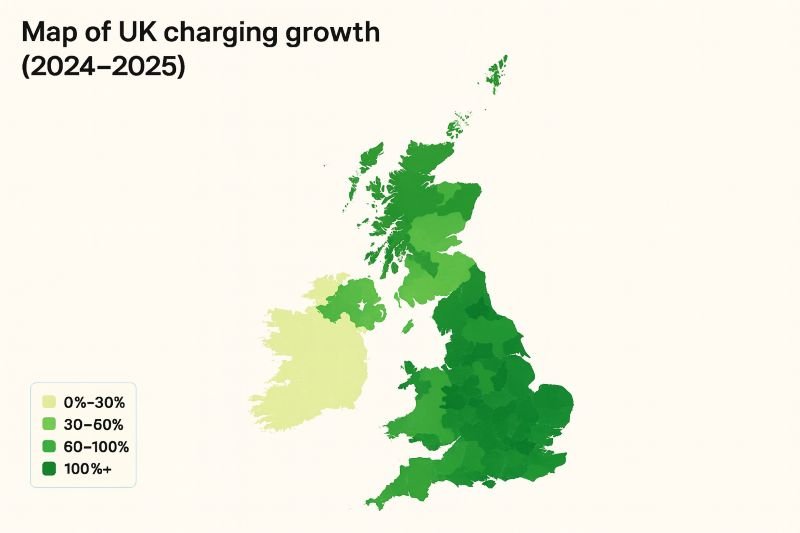
- Charging infrastructure growing at 27% year‑on‑year, with over 82,000 public charge points as of July 2025 (UK Government).
Looking Ahead
The ZEV mandate is more than a sales target; it’s a structural shift. By forcing manufacturers to prioritise EVs, it accelerates investment in battery technology, charging infrastructure, and consumer incentives. While challenges remain — from upfront costs to rural charging gaps — the trajectory is clear. Britain’s car market is being reshaped around electrification, and the mandate is the lever driving that change.
Conclusion
The ZEV mandate isn’t perfect, but it’s a powerful catalyst. It compels manufacturers to innovate, gives consumers stronger protections, and ensures Britain stays on track for net‑zero. For UK drivers, the message is simple: the car market is changing fast, and electric vehicles are at the heart of that transformation.